Intrusive Thoughts #1: Emotional Bananas and the Fruitbowl of Creativity 🍌
Hey, 90’s kids. Allow me to take you back to a safer, simpler place for a brief moment.
You just got home from school. You’ve made a milo. You’re watching A*mazing. You really want a Gameboy. It’s time for an ad break:
“Na na na na na na, make those bodies sing!”
That’s right, it’s bananas. Bananas the brand.
This little nugget of nostalgia entered my consciousness for some reason the other day, but then it got me thinking about something a lot less sentimental: the fundamental conflict between affective resonance and cognitive evaluation in advertising theory.
Brandnana
If the product or service is good enough, it should sell itself, right?
Even monkeys know bananas are good. Reminding a target audience that bananas exist is akin to flogging the virtues of oxygen and water.
So why does Big Banana need to invest in a national creative awareness campaign when everyone already knows what a banana is and what it does? Are they not just throwing good money after bad?
Rational vs emotional
Peeling back the layers, at the heart of this question is the longstanding tension between the emotional vs the rational in creative ad campaigns.
The truth is one can’t really exist without the other — the emotional hook (bananas will keep you healthy, and if you’re healthy you feel good) has to work in tandem with the rational decision driver (bananas are easy to eat and affordable) for recall and conversion to occur.
The data has always backed this up. Whatever the product or service, from bananas to life insurance, a balanced strategy that combines emotional resonance with rational justification consistently outperforms less balanced ones.
Further, this is linked to the misconception that investing too much in creativity is an unquantifiable and unnecessary luxury.
But the numbers tell a very different story.
The data doesn’t lie
For decades, the data has consistently shown that creativity is one of the biggest drivers of ROI, yet its power is still chronically underestimated.
(And more to the point, there’s an inherent business risk in playing it too safe.)
Here’s a couple data points to consider:
- Creatively awarded campaigns delivered 11 times the return on investment of non-creatively awarded campaigns¹
- Long term trends show that most creative agencies are over twice as effective as other agencies
¹ Peter Field/IPA ‘The Link Between Creativity and Effectiveness’ IPA Effectiveness Databank (1996–2014)
Creativity 🤝 Authenticity 🤝 Effectiveness
Effectiveness rarely comes from saying more. It comes from being remembered. Creativity is what turns exposure into memory, and memory into action. In a world where most brands are in a constant battle against being lost in the white noise of competition, creativity is how meaning and recall is baked into effectiveness.
Speaking of white noise, audiences have become brutally good at spotting ideas that exist purely to win attention, clicks, or awards. What cuts through now is work rooted in something real: a genuine insight, a human truth, a clear point of view.
Authenticity doesn’t mean forcing a feeling, it means coherence between what a brand says, what it does, and how it shows up. When that alignment is there, creativity stops feeling like a tactic and starts behaving like a reliable friend.
Banana feels
So yes, bananas should make you emotional.
Not because fruit (or are they herbs?) needs a brand campaign, but because humans don’t make decisions in spreadsheets. They make them through feelings, stories, nostalgia, and ideas.
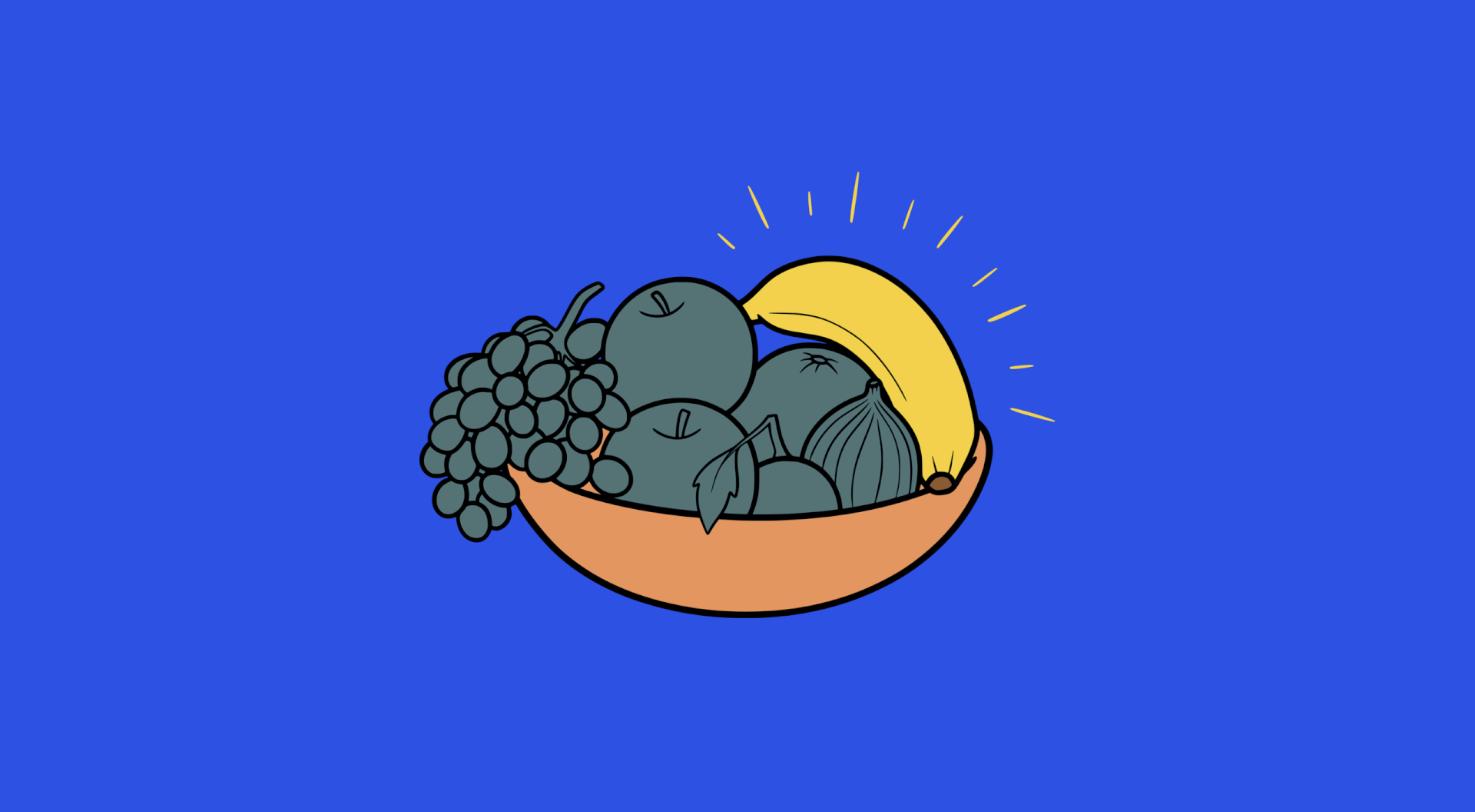
Creativity is how brands earn their place in the fruit bowl of life, and once it’s in there, a banana is no longer just a fruit, it’s a habit, an inevitability, and a little yellow reminder of what matters most to you.
I’m going to go and eat a banana now.
Reach out for a chat to see how we can fill your fruitbowl of creativity too.